Newsletter Subscribe
Enter your email address below and subscribe to our newsletter

 ByJohn A
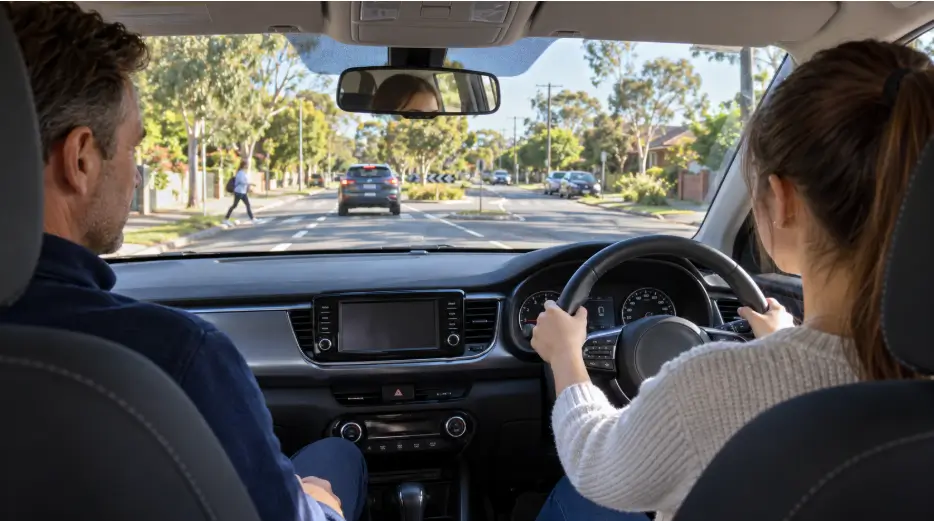
An intersection can look straightforward from the passenger seat. From behind the wheel, a learner must read signs, choose a lane, watch other road users and decide when it is safe to move. In Pakenham, those decisions arise on quiet local streets as well as busier roads where traffic moves at a different pace.
A local driving school can make intersection practice less overwhelming by teaching one decision at a time. The goal is not to remember a handful of junctions. It is to understand what to look for and use the same careful approach wherever you drive.
Many intersection mistakes begin well before the turn. A learner may notice a lane arrow too late, approach too quickly or focus only on the traffic light. By the time the car reaches the intersection, there is little room to correct the plan calmly.
An instructor can teach you to look further ahead. First, identify the type of intersection and any signs or road markings. Then check which lane you need, whether traffic is slowing and where pedestrians or cyclists might appear. Reduce speed in good time, and keep enough distance from the vehicle ahead to see and respond.
This preparation makes the final decision simpler. Instead of trying to read a sign, change lanes and make a turn at the same moment, you can handle each task as it arises. If you realise you are in the wrong lane, continue safely and find another legal route.
Learning the give-way rules is essential, but recognising when they apply takes practice. At a junction, the priority can depend on signs, signals, the direction of travel and other road users. An instructor can pause after a manoeuvre and ask why you waited or proceeded. Being able to explain the reason shows more understanding than copying the movement of the car ahead.
Start with quieter intersections where there is time to observe. Before moving, identify the road users who may have priority and check that the path is clear. As your judgment improves, practise in busier conditions. The instructor can gradually offer fewer prompts so you take responsibility for the decision.
Pressure from a driver behind should never determine whether you enter an intersection. If you need more time to judge a safe opportunity, take it. A calm decision is more useful than a hurried one that happened to work.
A turn is not finished when the front of the car enters the next road. You must approach in the correct position, signal where required, control your speed, observe traffic and pedestrians, then enter the new road safely.
Learners sometimes concentrate so hard on oncoming vehicles that they overlook people crossing the road they are turning into. Others watch the pedestrian area but forget to check whether traffic ahead has stopped. A local instructor can help you build a scanning routine that covers the whole movement without turning it into a rushed checklist.
After each turn, review one specific point. Did you see the crossing area early? Was your approach speed slow enough to assess it? Were you positioned correctly before turning? Small, precise corrections are easier to apply on the next attempt than a general instruction to “pay more attention.”
Roundabouts combine lane choice, gap judgment, signalling and observation. Begin with a simpler layout before attempting one with more lanes or heavier traffic. Read the signs and arrows on the approach, slow down and watch vehicles already circulating.
In Victoria, a driver entering a roundabout must give way to vehicles already in it and to trams entering or approaching it. Follow the applicable signs and lane markings, and signal as required for your movement. Keep watching for motorcycles and bicycles, which can be harder to notice in moving traffic.
An instructor can help you assess a gap without telling you to enter at every opportunity. Afterward, discuss what you saw: How fast was the approaching vehicle moving? Did you have a clear path? Did you leave enough time to enter smoothly? That conversation develops judgment you can use at another roundabout.
Knowing one Pakenham intersection well does not mean you have mastered intersections generally. A familiar junction may feel different during school pickup, in rain or when a queue blocks your view. Practice should therefore include more than one layout and more than one traffic situation, introduced at a level suitable for the learner.
A useful lesson might begin at a quiet T-intersection, move to a signalised junction and finish with a roundabout. The instructor can ask what changes between them and which observation habits remain the same. On another day, the learner can revisit a similar task with less coaching.
This variety helps prevent dependence on landmarks. You learn to respond to the signs, markings and road users present now, instead of assuming a junction will behave exactly as it did last time.
See also: High-Quality Towel Laundry Service in 40504, KY
A driving lesson is most valuable when its feedback carries into supervised practice. At the end of a session, ask your instructor to identify one intersection skill you handled well and one that needs work. The next drive with an eligible supervisor can focus on that skill at an appropriate location.
For example, if you chose a lane too late, practise spotting signs and arrows earlier. Your supervisor can ask which lane you expect to need, then give you time to decide. If the problem was judging a safe gap, begin in lighter traffic and talk through what you can see before attempting a more demanding junction.
Keep the discussion calm and specific. Detailed feedback is best given after parking somewhere safe and legal. While the car is moving, directions should arrive early enough for the learner to act without rushing.
Lessons near the Pakenham East testing area can help you become familiar with the surrounding roads. Still, the strongest preparation is the ability to approach an unfamiliar intersection and make a safe decision without being coached through every step.
A mock drive can reveal whether you recognise lane markings, manage speed, give way correctly and recover calmly when you cannot make a planned turn. Use the result to guide further practice rather than trying to memorise a supposed test route. Check current official VicRoads and Transport Victoria information when preparing for the drive test.
A well-taught learner understands why an action is safe. If you are looking for a driving school Pakenham learners can use for structured practice, explain which intersections you find difficult when booking. That gives the instructor a clear starting point and helps each lesson build a skill you can take onto new roads.