Newsletter Subscribe
Enter your email address below and subscribe to our newsletter

 ByJohn A
A backyard spa can turn an ordinary Salt Lake City, Utah, patio into a dependable place to unwind after work, recover after a Wasatch Front hike, or gather with family on a cool evening. Before comparing finishes or features, begin with how the space will fit your home, yard, and routine. Homeowners exploring Bullfrog spas in Salt Lake City can use that practical approach to create an area that feels inviting instead of complicated.
The most comfortable spa spaces are usually not the largest or most elaborate. They are placed close enough to use regularly, built on a stable base, protected from uncomfortable views and wind, and designed with safe movement in mind. Salt Lake City’s hot summers, changing seasons, and winter weather make those early planning choices especially important.
Define what the spa area needs to do before selecting its location. A quiet two-person retreat needs less surrounding seating than a space intended for family use or casual entertaining. Think about who will use it most, how often, and what should be within reach. A homeowner who expects to soak several nights a week may choose a smaller installation near the back door, while a weekend gathering space may need more room for chairs, towels, and circulation.
Walk the yard at different times of day before committing to a spot. Consider the distance from the house, views from indoor rooms, afternoon sun, prevailing breezes, neighbor sightlines, and noise from streets or mechanical equipment. Leave service access around the spa and enough room to lift and store the cover without blocking a gate or walkway. Mark the proposed footprint with string, chalk, or painter’s tape to reveal tight turns and awkward paths before construction begins.
A filled spa is heavy, so it needs a level surface designed to carry the load. Reinforced concrete, an appropriately engineered deck, or a purpose-built platform can be suitable options depending on the property. Drainage matters just as much. Grade the surrounding area so water moves away from the home and does not collect beside steps, equipment, or walking surfaces. Standing water can make the area slick and shorten the life of nearby materials.
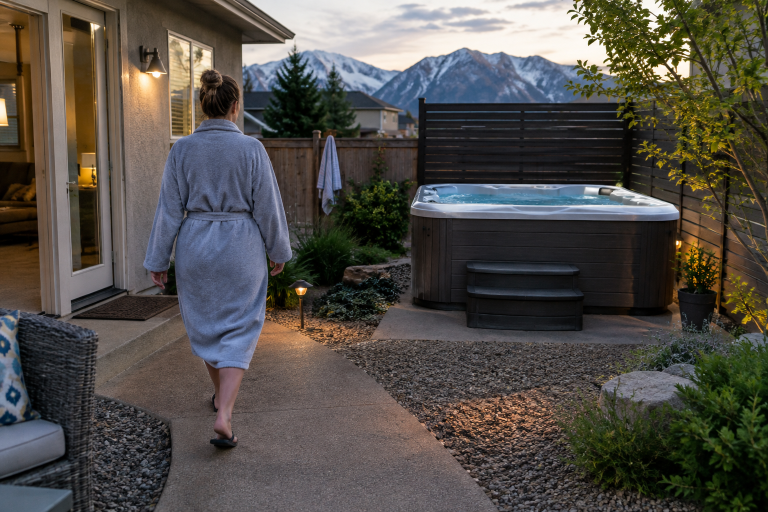
Comfort depends on the trip from the house to the water. Keep the route short, direct, and well defined. Use slip-resistant paving, leave clearance for spa steps and handrails, and include a dry landing area for robes or towels. A small bench, weatherproof hooks, and closed storage for supplies can make everyday use simpler. Review local requirements early, because Salt Lake City notes that spa-related electrical, plumbing, and structural work may require permits or inspections through its building permit process.
Privacy works best when it feels intentional rather than fortress-like. Layered shrubs, ornamental grasses, slatted screens, low garden walls, and pergolas can interrupt unwanted views while preserving airflow. Outdoor curtains may add flexibility where a permanent screen would feel too heavy. Often, simply turning the spa away from the busiest neighboring sightline creates a more relaxed setting without enclosing the entire patio.
Choose finishes for wet-foot traction, durability, and temperature comfort. Textured concrete, outdoor porcelain, composite decking, stone, and properly selected tile can all work when installed for exterior conditions. Keep the palette simple so the spa area connects visually to the home and landscape. Furniture should tolerate moisture, sun exposure, and temperature swings, while still being easy to move aside for cleaning or service.
Layered lighting creates a calmer result than one bright floodlight. Add low fixtures along the walking route, gentle lighting near steps and handrails, and soft accents in planting beds or along a wall. Include task lighting at storage or equipment areas, but aim fixtures away from seats and water to reduce glare. The goal is a clear route home after dark without making the backyard feel overlit.
Salt Lake City spa planning should account for both sunny summer afternoons and cold, snowy conditions. Provide shade with a pergola, umbrella, or nearby canopy, and use windbreaks where the yard feels exposed. In winter, prioritize a dry, illuminated path that can be cleared easily after snow. The Salt Lake City climate record documents local temperature, precipitation, and snowfall patterns, making it a useful reference when choosing plants, drainage details, and seasonal storage solutions.
A simple layout supports consistent care. Keep water-care supplies, towels, and cleaning tools nearby but out of sight. Make sure equipment remains accessible for routine checks and professional service. A properly fitted cover helps keep out debris and limits unnecessary heat loss. During the first few months, establish a repeatable schedule for water testing, filter care, surface cleaning, and cover inspection.
See also: Clear Questions, Better Answers: Guide to Stronger Written Discovery in California Civil Cases
A comfortable backyard spa space in Salt Lake City comes from thoughtful planning, not from adding every possible feature. A stable foundation, convenient path, useful lighting, sensible privacy, and realistic maintenance plan can create a retreat that fits naturally into everyday life throughout the year.